If you're looking at robotic cleaning systems, its filtration system is the crucial element. It's what you're investing in: the ability of the robot to move about and eliminate the toxins from your pool. Understanding the subtleties of how different robots accomplish this will help you choose a model that addresses your specific debris challenges and will ensure you receive the flawless results you've been hoping for.
1. The Cleaning Trinity The Cleaning Trinity: Suction, Filtration and Scrubbing.
Be aware that effective cleaning is a three-part process. The first step is for the brush to be agitated to break up the debris on the surface. Then, a strong suction system should be employed to draw all the debris that has been suspended into the collection system. The filtration process must trap and hold that debris, stopping it from being recirculated to the pool. The reason for this is that a weak spot in one of the components will lead to a subpar cleaning. A robot with powerful suction, but has weak brushes will still leave behind stuck-on alga. A robot with excellent brushes, but poor filtration can cause dirt to be stirred up.
2. Brush Types and Their Specific Application
The robot uses brushes to clean dirt. The material used for the brushes is important for the safety of surfaces and their effectiveness.
Stiff Bristle Brushes: These brushes are specifically designed to provide a vigorous cleaning of surfaces like concrete, gunite and pebble Tec. These brushes are essential for removing embedded algae and biofilm that adhere to the rough plaster. If you are using them on vinyl liners, they may cause scratches and wear.
Soft or rubberized brushes (Vinyl or Rubber) They are the norm for fiberglass and vinyl liner pools. They are able to scrubbing with a high ability without being too rough, which can damage softer surfaces. They're effective in loosening common dirt and sediment without risk.
Brushless Roller Systems: A modern technology that is used in advanced models. Instead of rotating brushes, they utilize textured rollers that direct debris towards the suction intake. They are often very effective in all kinds of pools and are more gentle while reducing the wear-and-tear that eventually occurs with rotating brushes.
3. The importance of a Top-Loading Filter Canister.
This is perhaps the most significant usability feature. Top-loading robots allow you to take filter cartridges and bags from the top of the robot after you've lifted it up from the pool. This stops the bulky, clogged filters from falling to the bottom, splashing dirt back into the pool or on your deck. This makes maintenance simple.
4. Filter Media Types: From Basic to Superior.
The size of particles captured by the robot varies based on the type of filter used.
Standard Mesh Bags (common in older models and in simpler styles) They are made of mesh that is standard. They're effective in collecting larger particles like leaves, twigs and other debris. They also allow finer silts and dust to move through and then return to the water.
It is the gold standard for robot pool cleaners. These cartridges offer a huge surface area that can catch particles less than 2 microns. This level of filtration is responsible for the sparkling water produced by top-of-the-line machines. They're usually reuseable and simple to wash clean.
Fine Micron Mesh Cartons Reusable alternatives for pleated paper. The highest-quality mesh is able to reach the filtration level of paper and will last in the long run, though it may require more vigorous cleaning.
5. Filter systems that are specifically designed to remove certain types of debris
Many robots provide multiple filter options for different jobs.
Large Debris Baskets: During heavy leaf fall, an open-weave basket or cage made of plastic will be set up. It lets water to flow easily through while also capturing large volumes of debris and not clogging every few seconds.
Fine Filter Cartridges (for weekly maintenance) These cartridges focus on the fine dust, sand and other particles that make water appear dull.
This is a must-have feature for pools with different types and sizes of debris.
6. Suction Power & Water Flow Rates
The power of the robot pump onboard is the key to differentiate. Manufacturers do not provide specific specifications. A more powerful suction will allow the robot to capture larger pieces of debris (e.g. Sand, for instance, which is dense) and remove debris more effectively out of the water column. It is used in conjunction with the brushes. Strong suction will ensure the particles are quickly removed.
7. Active Brush Systems (vs. Passive.
This is the power source of the brushes.
Active Brushes: The motor of the robot drives the brushes directly. This provides a dependable, consistent scrub regardless of how fast the robot is moving. This is the best method to scrub walls and remove algae.
This brush system is not motorized. It only rotates when the robot passes over the surface of the pool. The system can provide some agitation and scrubbing but is not as effective as the brush system that has an active motor.
8. Wall and Waterline Cleaning Technology.
The robots may not all clean the walls in the same way. Basic models are able to only climb only a few inches to the top of the wall. Advanced models use several techniques:
Boost Mode : The robotic will increase suction and/or speed of the brush when it detects an area that is vertical. This makes sure that the brush doesn't slide, and it will get an excellent scrub.
Oscillating brushes: Certain models have brushes that move at different speeds on the walls for the most efficient cleaning.
Dedicated Waterline Cleaning The best robots stop just at the water's edge and do a concentrated scrubbing to get rid of any oily debris.
9. Cleaning Cycle Patterns and Programming
The filter system will only catch debris that is brought into the intake by the robot. Thus, navigation is an integral part of performance.
Random Patterns can be inefficient. They may not be able to cover all areas (especially in complex pools) It takes longer to obtain complete coverage.
Smart Patterns that are Systematic (Grid Scan and Gyroscopic) These patterns will ensure the robot covers the whole pool surface as efficiently as feasible. This guarantees that the system for filtration is able to clean it.
10. The relationship between robots and primary pool filtering.
A robot cleaner is an auxiliary cleaner. It cleans pool surfaces (floors walls, walls, and waterline), then filters the debris into its self-contained canister or bag. The primary pump and filter system in your pool will be significantly less strain. It's your primary filtering system that filters out the dissolved particles, and move the chemicals. The main filtration system of your pool has to continue running all day long. Robots work alongside it to create perfectly balanced, clean water. Have a look at the most popular pool-reinigungstipps for blog advice including pool waterline cleaner, pool sweeping, pool waterline, swimming pool in, the pool cleaner, swimming pools stores, swimming pool cleaners, robot swimming pool, cleaner for swimming pool, max pools and more.
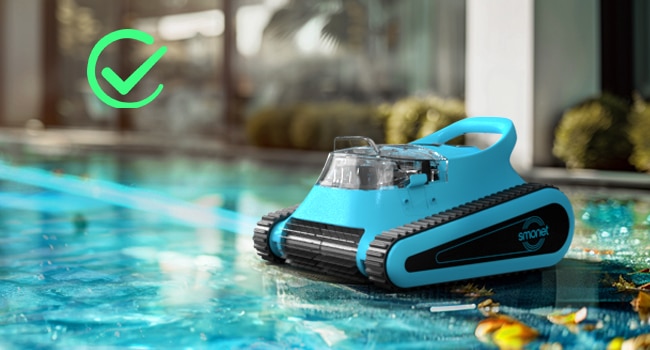
Top 10 Tips For Improving The Energy Efficiency Of Robotic Pool Cleaners
Knowing the efficiency of energy used by robotic pool cleaners is important since it can directly impact your operating costs over time, and your ecological footprint, and your convenience. The newer robotic cleaners don't depend on the pool's main pump. It's a very energy-intensive system. They are operated independently by the low-voltage motor, which is highly efficient. The most significant benefit of these machines is that they save massive amounts of energy. But there are many different robots that are not equal. If you take a look at the particulars of energy consumption and operational modes as well as necessary infrastructure, you'll be able choose a model which maximizes performance without consuming a lot of energy.
1. The Fundamental Advantage: Independent Low-Voltage Operation.
This is the fundamental idea. A robotic cleaner has its own motor and pump that are powered with a separate transformer plug-in. It runs on low-voltage DC power (e.g. 32V or 24V) that is more effective and safe than operating the 1.5 to 2 HP main pump continuously for hours. This independence allows you to operate the robot without having to run the energy-intensive main pump.
2. Watts. Horsepower.
To appreciate the savings, you must be aware of the amount. A typical pool's main pump draws between 1,500 and 2,500 watts each hour. The cleaning cycle of a robot pool cleaner can range from 150 to 300 watts. This is an energy savings approximately 90 percent. The energy needed to power a robot over 3 hours is the same as running a number of lights in a home simultaneously. This is in contrast to the main pump which draws energy similar to an appliance.
3. The DC Power Supply/Transformer and its Essential Role
The black box, that sits between the plug and the robot cable, acts as an intelligent converter. It converts 110/120V AC into DC power for the robot. This component's quality is crucial to the safety and performance of the robot. It also houses the control circuitry to program the cycles and offers the essential Ground Fault Circuit Interruption (GFCI) protection, which cuts power immediately if an electrical fault is detected.
4. Smart Programming to Increase Efficiency.
The program of the robot determines the energy use. Efficiency is enhanced through the capability to select specific cleaning cycles.
Quick Clean/Floor Mode: The robot is run in this mode for a shorter duration (e.g. an hour) using only floor cleaning algorithms active, using less energy.
Full Clean Mode: A standard 2.5 to 3 hour cycle for a thorough cleaning.
To avoid wasting energy to avoid wasting energy, limit your use to the power that is required to finish the job.
5. The Impact of Navigation and Energy Consumption.
The robot's route to clean is closely linked to energy use. The navigation of a robot that is unpredictable and "bump-and turn" is inefficient. It can take up to up to four hours or more clean the pool in a random manner, consuming extra energy. A robot with systematic, gyroscopically-guided navigation cleans the pool in a methodical grid pattern, completing the job in a shorter, predictable timeframe (e.g., 2.5 hours), thereby using less total energy.
6. GFCI Outlet Requirement & Location.
To ensure safety the robot's power source must be connected to an Ground Fault Circuit Interrupter (GFCI) outlet. These are the outlets with "Test" and "Reset" buttons, which are typically found in bathrooms and kitchens. Installing a GFCI plug in your pool must be done by an electrician licensed by the state in the event that you don't already have one. The transformer needs to be at least ten feet away from the edge of your pool in order to ensure it is safe from water splashes and the elements.
7. Cable Length and Voltage Drop.
The power at low voltage that flows through the cable may suffer "voltage drop" over very long distances. Manufacturers set a limit to the length of cable (usually 50-60 feet). A cable that is too long could decrease the power that is available to the robot. This could cause a decrease in performance slowing down movement, and less ability to climb. The robot's cable must be long enough to reach the furthest point of your pool from the outlet. Avoid using extension cables, as these can cause voltage drops and pose a safety risk.
8. Comparing Efficiencies to Other Cleaner types.
Knowing what you're doing to the robot can help you justify the initial cost.
Suction-Side Cleaning: These machines depend solely on the main suction pump. They require that you run your large pump at least 6-8 hours a day that results in extremely high energy costs.
Pressure-Side Cleaners: These use your main pump to create pressure and often come with a booster pump that adds another 1-1.5 HP of continuous energy draw.
The robot's performance alone makes it the best choice for a long-term solution to save money.
9. Calculating operating costs
It is possible to estimate the price for operating your robot. The formula is (Watts/1000) * x hours, x Electricity Price ($/kWh), = Cost.
Example: a robot of 200 watts that is used for three hours a day, three days in a week, for $0.15 per Kilowatt.
(200W / 1000) = 0.2 kW. (0.2 kW) x 9 hours/week is 1.8 KWH. 1.8 hours multiplied by $0.15 equals $0.27 per week or $14 annually.
10. Energy Efficiency is an Quality Marker
Generally speaking, the most advanced motor technology and efficiency go hand-in-hand with a better-quality product. A machine that is able to clean thoroughly in a shorter amount of time and with less power indicates superior engineering, a more efficient navigation system, and an efficient and powerful pump system. While a higher-wattage motor might suggest greater power for climbing and suction, it's the combination of powerful cleaning and a quick low-wattage time frame that defines the true effectiveness. An investment in a reliable designed, well-designed motor will pay off on your monthly bills for many years. View the recommended saugroboter pool akku for blog tips including pool sweeping, the pool cleaner, robot for the pool, pool cleaners, robotic cleaners for above ground pools, pool cleaner pool, pool cleaner pool, cheap pool cleaners, aiper robot, poolside cleaning and more.
